Build a Solid Food Safety Barrier: Causes, Hazards of Aflatoxin Contamination in Corn and Professional Detection Solutions News Report As a major staple food and feed crop worldwide, corn quality safety is closely linked to food security and the healthy d
As a major staple food and feed crop worldwide, corn quality safety is closely linked to food security and the healthy development of animal husbandry. Aflatoxin contamination stands as a critical hidden risk for the corn industry. Classified as Group 1 carcinogens by the World Health Organization, aflatoxins pose severe threats to public health and industrial development. This article analyzes the causes and hazards of aflatoxin contamination in corn, and introduces professional detection equipment from Shandong Lanende Intelligent Technology Co., Ltd., delivering technical support for comprehensive food safety control.
I. Main Causes of Aflatoxin Contamination in Corn
Aflatoxins are metabolites produced by Aspergillus flavus and Aspergillus parasiticus. Corn is vulnerable to contamination throughout growth, harvesting, storage, transportation and processing. The key inducements are as follows:
1. Field growth stage
When corn ripens, prolonged high temperature (25-32℃) coupled with high humidity and rainy weather creates favorable conditions for mold growth. Crop lodging, pest infestation and grain damage allow molds to invade kernels easily. Low-lying farmland and late-maturing corn varieties face higher contamination risks.
2. Harvesting and drying stage
Freshly harvested corn piled in thick heaps tends to heat up and retain moisture. If it cannot be dried timely on rainy days, the moisture content of grains will stay above 14%, accelerating mold reproduction and toxin production. Contaminated drying grounds and incomplete drying before bagging will worsen the problem.
3. Storage stage (high-risk period)
Leaky and poorly ventilated warehouses lead to damp environments. Corn with moisture content over 13% stored in airtight conditions is prone to mold growth due to dew formation and damp grain at the bottom. Grain damage caused by pests and mixed storage of new and old corn will further spread contamination.
4. Transportation and processing stage
Corn kernels, corn flour, corn germ and other byproducts tend to accumulate high levels of aflatoxins. Rainwater and condensed water during long-distance transportation, as well as outdoor stacking in transit yards, will cause secondary mildew.
II. Severe Hazards of Aflatoxins
Aflatoxin B1 is the most toxic and harmful variant. It is cumulative in organisms and brings multiple risks to human and animal health.
• Risks to human health: Acute poisoning may result in nausea, vomiting and severe liver damage, even liver necrosis and death in extreme cases. Long-term intake of low-dose aflatoxins can cause liver cancer, weaken the immune system and damage kidneys and nervous systems. It also hinders the growth and development of children.
• Economic losses: Corn and related products exceeding aflatoxin limits will be rejected in procurement and trade. Returned goods in international trade lead to huge economic losses. Livestock fed with contaminated feed will suffer slow growth, reduced egg production and declined immunity, which disrupt the whole animal husbandry chain.
• Global challenges: Frequent extreme weather including high temperature, drought and heavy rain has expanded the scope of aflatoxin contamination in major corn-producing regions across America, Africa and Southern Europe, making it a global food safety issue.
III. Accurate Prevention & Control: Qualitative and Quantitative Detection via Lanende Aflatoxin Detector
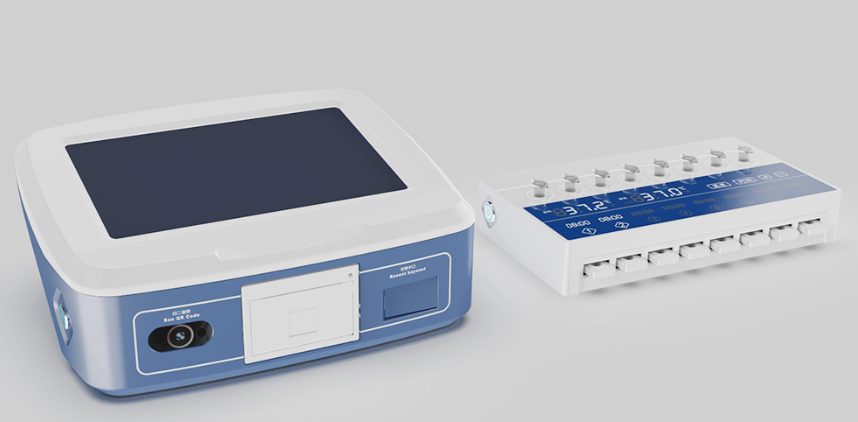
To meet the demand for rapid and precise detection of aflatoxins, Shandong Lanende Intelligent Technology Co., Ltd. has developed the LD-L1P Grain Mycotoxin Detector based on fluorescence immunochromatography technology. It realizes integrated qualitative and quantitative detection of aflatoxins, providing reliable technical support for full-chain risk control.
1. Working Principle
The instrument adopts imported fluorescent microspheres to label specific antibodies. Immunoreactions occur between reagents and aflatoxins in samples. The equipment captures fluorescent signal intensity and calculates toxin concentration via built-in standard curves, achieving both rapid screening and accurate quantification.
2. Core Advantages
• High precision: Detection range: 1-100 μg/kg; Sensitivity: 0.1 μg/kg. The detection error is less than 5% and the coefficient of variation is below 3%, effectively identifying trace contamination.
• High efficiency: Test results can be obtained within 10 minutes. It supports simultaneous testing of multiple samples and can be used on site without professional laboratories.
• Easy operation: Equipped with a 7-inch touch screen and Android operating system. Operators can master the use after simple training, and the device adapts well to corn, corn flour, feed and other samples with simple pre-treatment.
• Stable performance: Constant temperature incubation design eliminates the impact of ambient temperature and humidity. Test strips can be stored at room temperature, and test data is traceable and connectable to supervision platforms.
• Multi-item detection: Besides aflatoxin B1, B2, G1 and G2, it can detect deoxynivalenol, zearalenone, fumonisin and other common mycotoxins.
3. Application Scenarios
Grain depots, feed processing plants, food safety supervision departments and export enterprises can apply this detector for raw material inspection, routine sampling and quality control, to avoid unqualified corn entering the market and cross-border trade.
IV. Conclusion
Aflatoxin contamination in corn arises from inadequate management in every link of the industrial chain, and its strong carcinogenicity threatens public health and industrial development. The LD-L1P Grain Mycotoxin Detector from Shandong Lanende features high sensitivity, fast detection and easy operation. It completes qualitative and quantitative analysis of aflatoxins efficiently, helping build a solid safety line for corn purchasing, storage, processing and trade, and safeguarding food safety.
 PrevRapid & Accurate Mycotoxin Detection: Reliable Colloidal Gold Test Cards Mycotoxins are toxic secondary metabolites produced by toxigenic fungi during crop cultivation, harvesting, transportation and storage. These harmful contaminants widely infiltra
 NextLD-WB8 Microwave Digester: High-Throughput Intelligent Sample Preparation Solution for Modern Analytical Labs
Recent Articles
LD-QX6530P Soil Redox Potential Meter: High-Precision In-situ Testing for Soil Environmental Analysis
LD-GT60 Soil Nutrient Analysis System: All-In-One Portable Mobile Lab for Precision Agricultural & Environmental Testing
LD-GT60 Soil Nutrient Analysis System: All-In-One Portable Mobile Lab for Precision Agricultural & Environmental Testing